Measured Genetics Behind the Next Generation
Measured Genetics Behind the Next Generation at Pavey Angus
The latest Angus Australia genetic reporting is helping Pavey Angus take another step in the development of our breeding program, combining objective genetic information with phenotype, structural assessment and practical performance.
Our breeding objective remains straightforward: produce functional Angus cattle with strong growth and carcase performance, while maintaining sensible mature cow size, fertility, temperament, structural soundness and eating quality.
The latest Angus Australia reports allow us to examine those traits across our herd and, importantly, use them when planning individual matings rather than simply selecting animals with the biggest headline numbers.
Our current mating analysis is deliberately looking at the strengths and weaknesses of individual females and identifying genetics that complement them.
For females carrying exceptional growth, for example, we are looking for genetics that can retain that performance while moderating mature cow size and adding carcase weight, eye muscle area and marbling.
For more moderate maternal females, we can take a different approach — maintaining their calving ease, fertility, temperament and manageable mature size while introducing additional growth, muscle and carcase quality.
That approach is producing some particularly interesting predicted combinations. In one example, expected average progeny values combine +147 for 600-day weight with +118 Mature Cow Weight, +89 Carcase Weight and +14.8 Eye Muscle Area, with predicted inbreeding of only 2%.
Other combinations being considered are predicted to combine approximately +140 or better 600-day growth with strong carcase weight, double-digit Eye Muscle Area and useful marbling, while keeping mature cow weight within the range we are seeking.
For us, this is an important distinction.
More is not always better.
If a female already carries exceptional growth, simply adding more growth may do little to improve the next generation. We would rather use complementary genetics to retain her strengths while addressing areas where we believe the resulting progeny can be better balanced.
Genetic-condition management is another part of that process. Our latest PAA Genetic Condition Report from Angus Australia provides an ongoing picture of AM, CA, DD and NH within the herd and gives us another piece of information to consider when planning future matings.
But genetics on paper are only part of the equation.
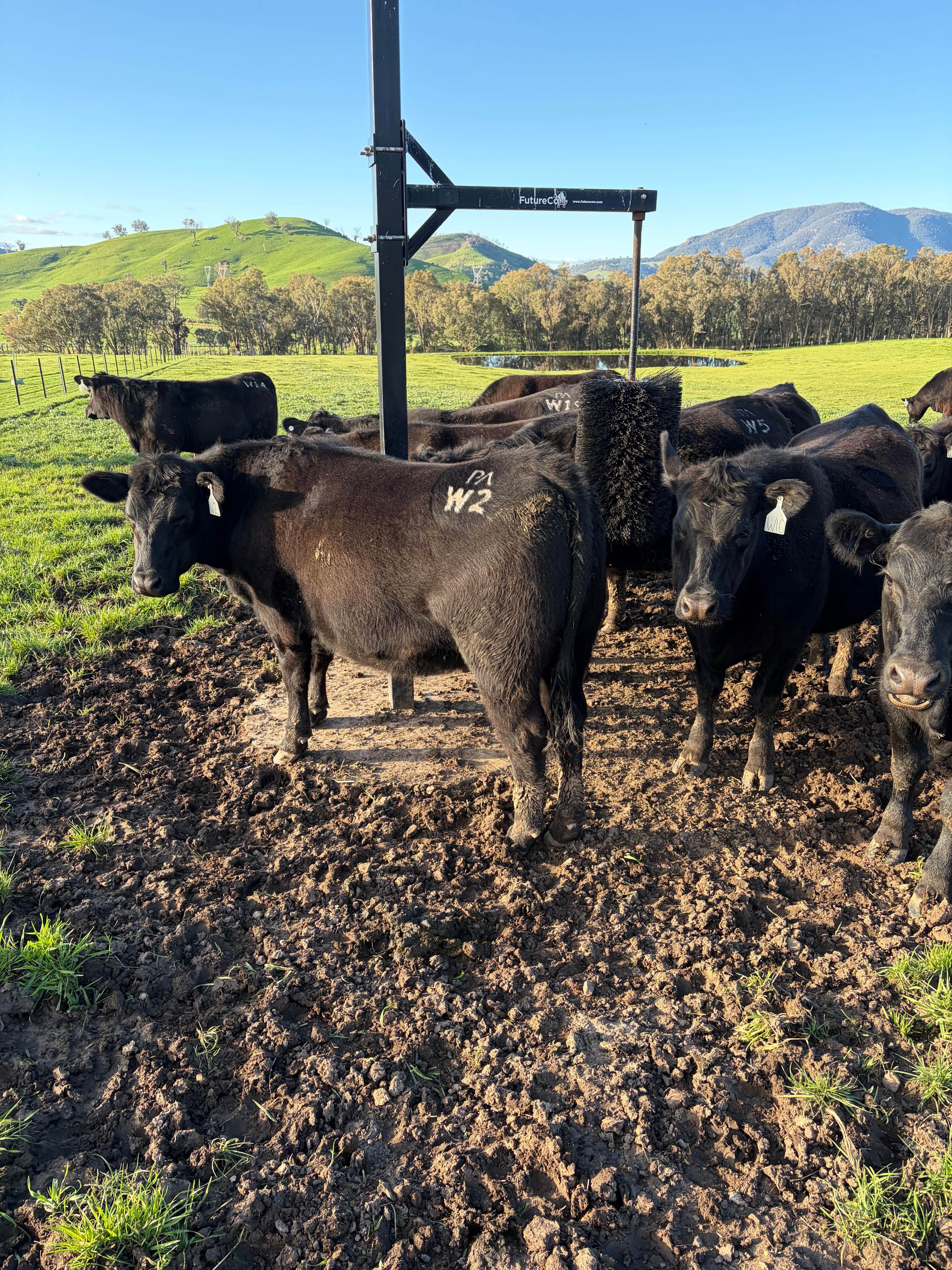
Our W females will shortly undergo further performance scanning and independent structural assessment. Those results will be considered alongside their TACE EBVs, EBV accuracy, pedigree, genetic-condition information, predicted inbreeding and, importantly, how the cattle actually perform and present under our conditions at Cudgewa.
The objective is not to breed cattle with the biggest numbers.
It is to use all the information available to produce balanced, functional Angus cattle with fewer weaknesses from one generation to the next.
Measured genetics. Functional Angus.